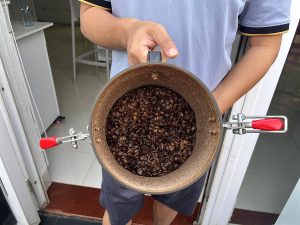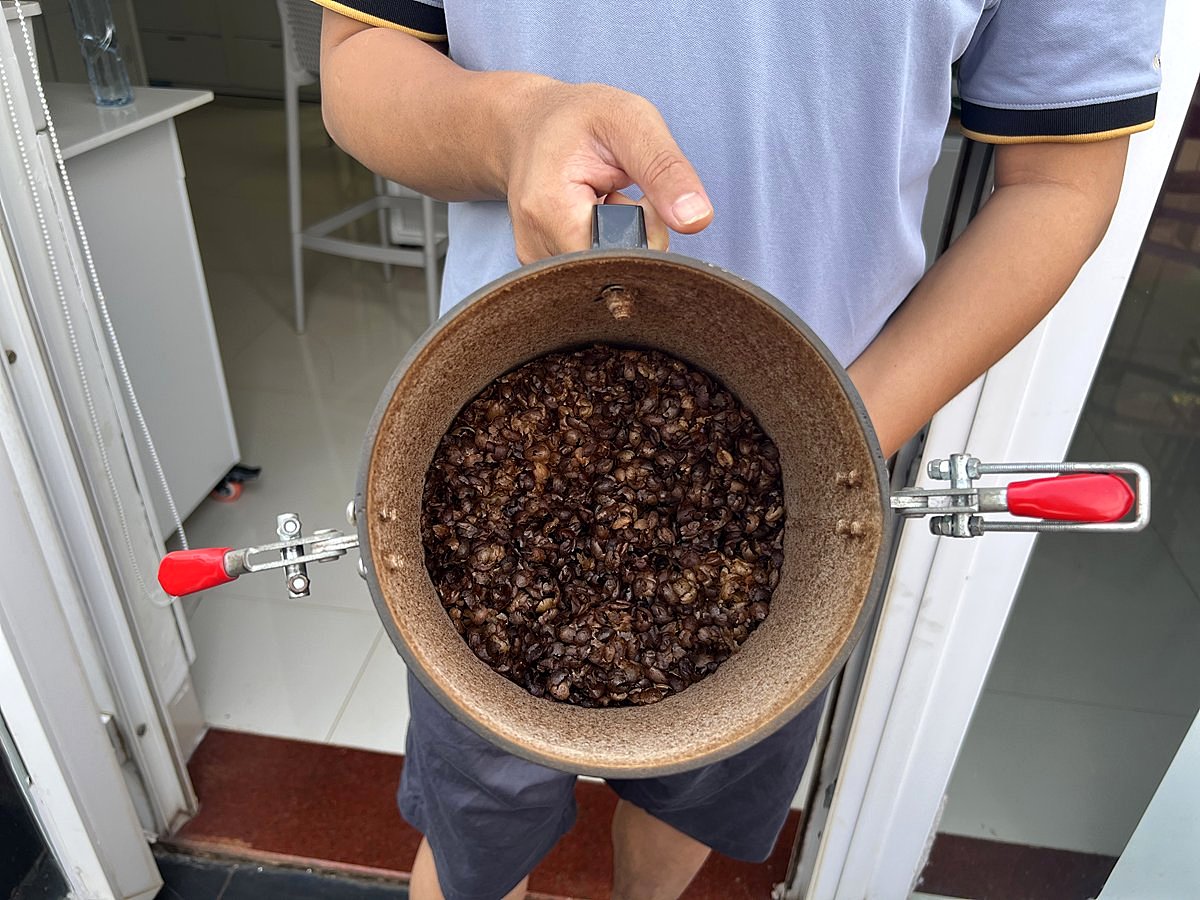
Roasters and café owners often ask us the same questions: why does this specialty coffee roast unevenly, why are there so many light beans, and was it really picked 100% ripe? Some even suspect the harvest or sorting was poor.
Uneven colour after roasting is not necessarily a sign of low quality. In specialty coffee, especially naturally processed lots, it can be a sign of complexity in processing. Here is why it happens, and how to tell it apart from a real defect.
Uniform colour after roasting is usually read as a sign of good green coffee. Very light beans in a batch are often called quakers: beans from unripe cherries that lack sugar. Quakers roast lighter, taste astringent, grassy, bitter or woody, and lower the quality of the cup. Professional roasters often remove them with an optical colour sorter after roasting.
Yet even specialty lots made from fully ripe cherries, sometimes sorted three times, can still show lighter beans after roasting. The cause is usually not ripeness.
In specialty processing, fermentation is a key stage. Put simply, it is the metabolism of microorganisms, which convert sugars into energy and other organic compounds. Measure the sugar in fresh cherries at harvest and again after fermentation, and you will see a clear difference that depends on how long and how the coffee was fermented.
With the equipment available in Vietnam, where specialty processing is still young, fermenting every cherry evenly is difficult, especially with the natural process (drying the whole cherry), which is the hardest method to control. After fermentation, cherries end up with different sugar levels.
The browning that turns green coffee brown and creates roast flavour comes from two main reactions:
Both reactions use sugar as their main fuel. Beans with different sugar levels after fermentation brown differently, so the batch roasts to uneven colours, even when every cherry was ripe.
Do not confuse fermentation-related light beans with quakers:
In a specialty lot, this variation can work like a natural blend, giving a layered, multi-dimensional cup.
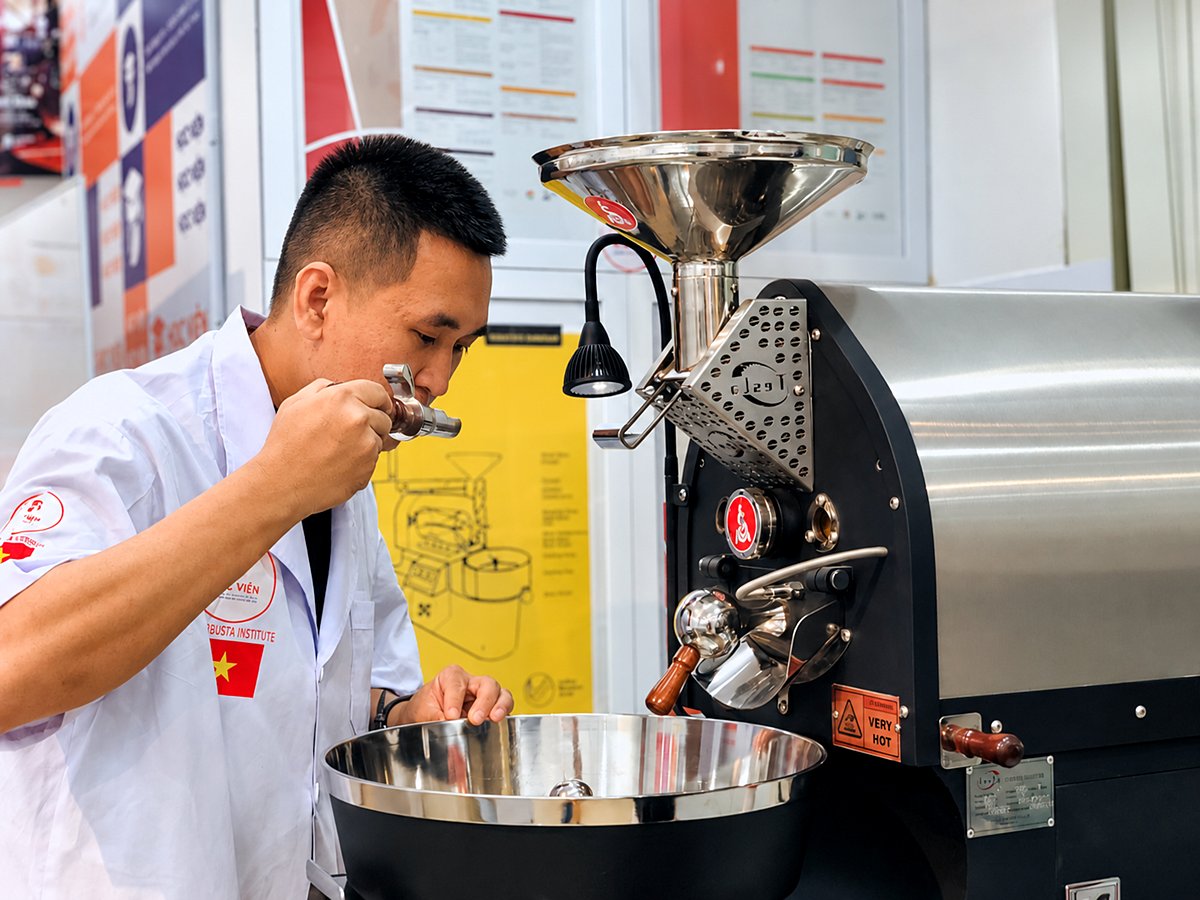
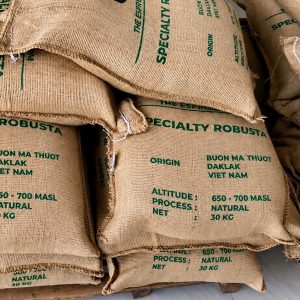
At The Espresso we sample-roast and cup every lot, and we share lot details so you know what to expect from the roast before you order.