Why do so many roasters and cafés keep coming back to Robusta Honey from Vietnam? It combines a bold, versatile cup with consistent quality and a supply large enough for commercial roasting. This guide explains how Robusta Honey is processed, why it is a reliable raw material, and what to look for when you buy it.
Robusta Honey is Robusta coffee processed with the honey method. After harvest, the cherry skin is removed but part of the sticky mucilage is left on the bean before drying. That mucilage is rich in natural sugars, and as the coffee dries it contributes sweetness and a more complex flavour.
For Robusta, the honey process softens the typical weaknesses of the bean, such as harsh bitterness and a short finish. The result keeps the thick body and intensity Robusta is known for, while adding a sweeter aftertaste and a smoother, honey-like character:
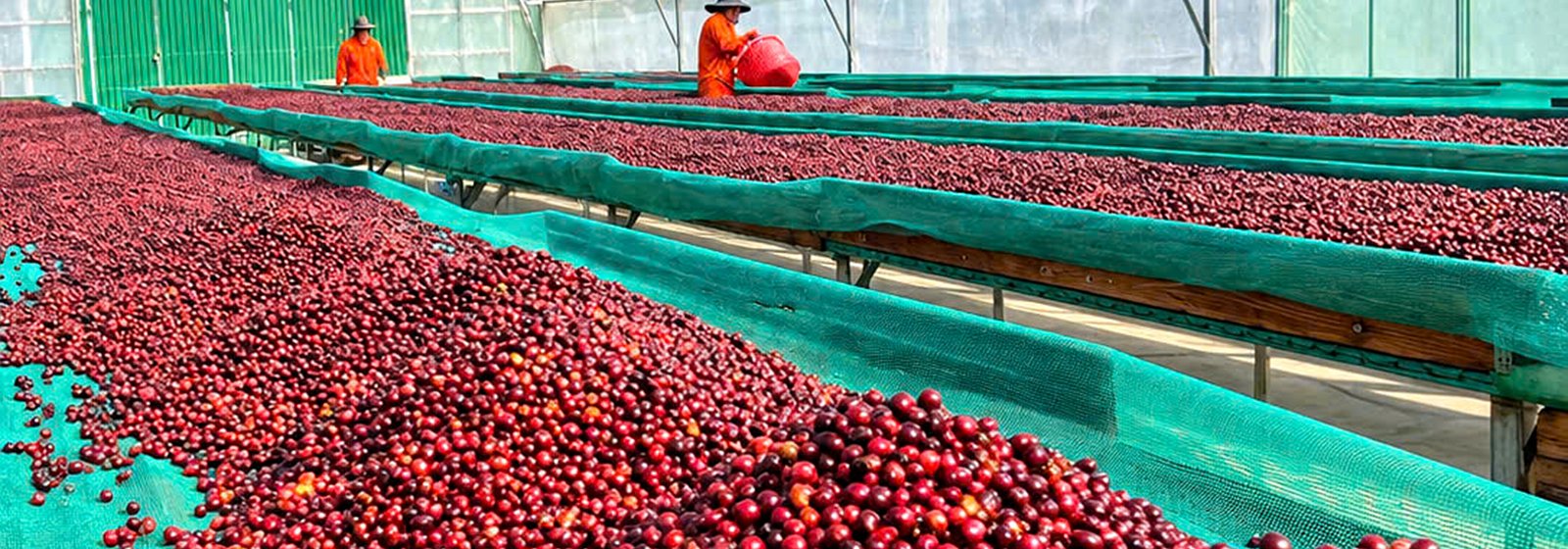
Quality starts at harvest, because the sugar in the mucilage depends directly on how ripe the cherry is. For good commercial Robusta Honey, cherries are picked selectively and ripeness typically reaches 95–98%. High ripeness brings more natural sugar, a sweeter bean and less green or astringent taste after roasting.
The cherries are washed, sorted and pulped to remove the skin and fruit flesh. Unlike the washed process, the mucilage is left on the bean. Its natural sugars, pectin, enzymes and organic acids build sweetness, body and depth during drying.
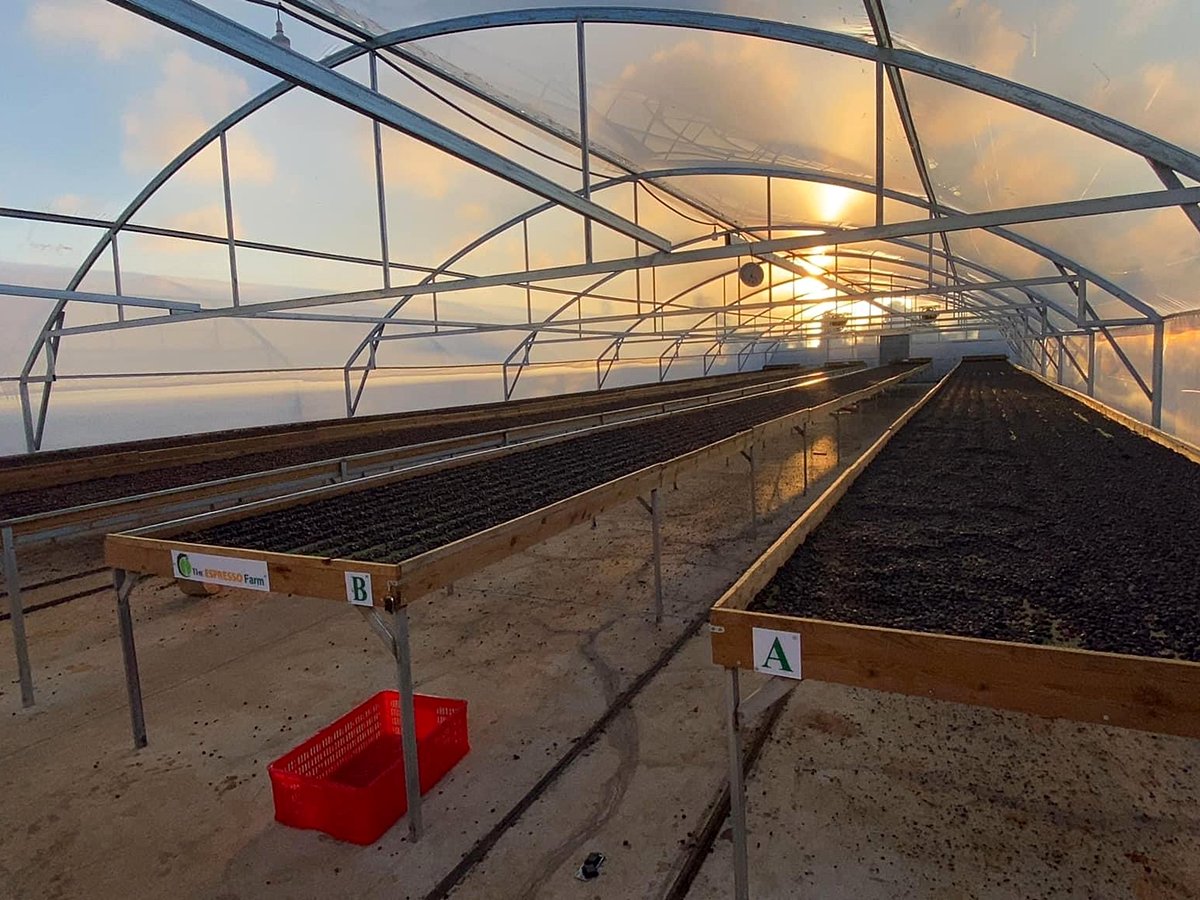
After pulping, the beans are still sticky and hold around 50–55% moisture. They are dried down to 11–12%, the standard level for storage and roasting. During this stage the sugar-rich mucilage keeps reacting naturally on the surface of the bean, shaping the sweetness and body of the final cup. Drying is done in the sun or in greenhouses.
Once the coffee reaches target moisture, the dry parchment is removed by hulling to obtain green coffee. Hulling is controlled to avoid broken or scratched beans, which would roast unevenly. The green coffee is then graded by screen size; for commercial roasting, S16–S18 is common because it roasts evenly and gives a stable flavour.
Unlike many small-lot specialty coffees, Robusta Honey in Vietnam benefits from scale. The large Robusta areas of the Central Highlands, in Dak Lak, Dak Nong and Gia Lai, keep supply stable from season to season, and the sunny, clearly defined dry season suits honey processing well. Roasters often use it as a bridge between commercial Robusta and premium Robusta: enough volume, with a clearly better flavour profile.
Compared with Arabica and small specialty lots, Robusta Honey offers a strong balance of flavour and price. It lets roasters and café brands control raw material costs while keeping a consistent cup.
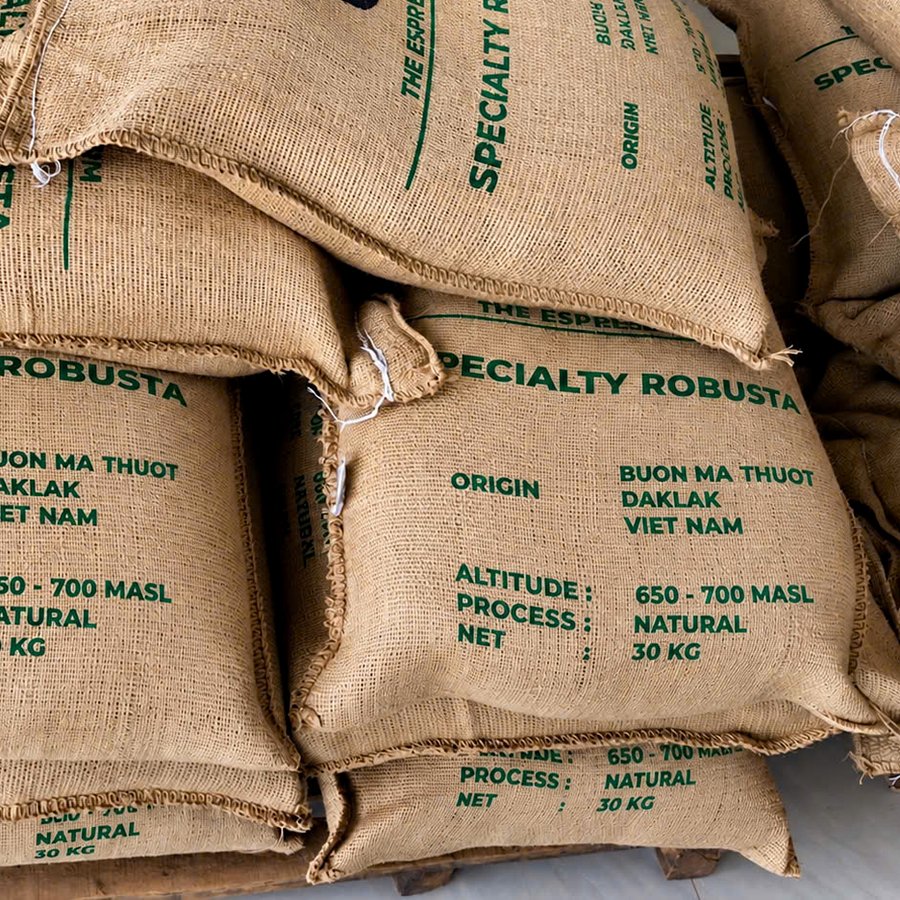
Our Robusta Honey comes from Cu M’gar in Dak Lak, one of the best-known Robusta areas of the Central Highlands, with fertile red basalt soil and a clear dry season. Cherries are harvested at high ripeness, honey-processed and fully sun-dried.

Current prices are listed on our green coffee supply page. We can send lot details and samples, and quote by volume, packing and destination.